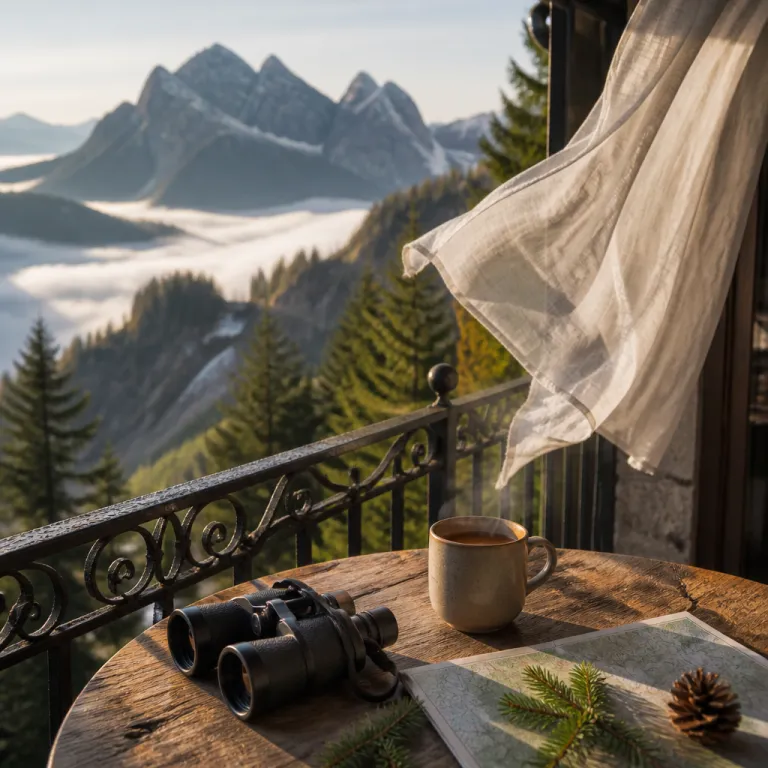
From sea level to 1 500 meters: how altitude rewrites the view
Stand in a coastal resort at 10 meters above sea level and the horizon runs flat, a clean line where water meets sky. Shift your stay to a mountain hotel in Europe at around 1 500 meters and the geometry of the landscape changes completely, with peaks, ridges and deep valleys stacking into layered panoramas. This contrast defines many of the most memorable alpine views in the Alps and Dolomites, where height is not a gimmick but the core of the visual experience.
Mountain hotels in Europe act as hosts in a vertical theatre, while sea level resorts frame a horizontal stage of beaches and ocean. Typical alpine properties sit well above valley floors, and that difference in elevation helps explain why colours often appear crisper and horizons more legible in the clear mountain air. When you choose a hotel in the Dolomites or the wider Alps, you are not just booking a room, you are booking a specific angle on light, sound and weather that coastal resorts simply cannot reproduce.
Guests who are used to a resort by the sea often underestimate how altitude reshapes daily rhythms. Sunrise reaches a mountain ridge earlier than the valley floor, and in the Dolomites the first light ignites limestone towers in a phenomenon locals call enrosadira, turning grey rock into soft orange and pink. That is why view-obsessed travelers in regions such as Val Gardena, Alta Badia or the Puster Valley often seek out hotels that design their terraces and spa decks around the east facing skyline rather than the pool, because the drama happens in the sky long before breakfast.
The Dolomites case study: vertical drama from Val Gardena to Tre Cime
If you want to understand what altitude allows a hotel to see, start with the Dolomites. These Italian limestone mountains rise abruptly from meadows and forests, so a modest change in elevation between one resort and another can mean a completely different set of views. Many of the most striking mountain panoramas in the Alps and Dolomites sit on natural balconies above Val Gardena, Alta Pusteria or the Puster Valley, where cliffs and spires feel almost within reach.
In Val Gardena, a stay in Ortisei or Selva Val Gardena places guests inside a natural amphitheatre of peaks, with hiking trails leaving directly from many hotels. Families who plan a stay in the Dolomites often compare places to stay in Val Gardena with those in Alta Badia or San Candido in Alta Pusteria, weighing ski access against quieter alpine meadows and child friendly spa facilities. For summer and shoulder season, properties near Alpe Siusi or Val Funes trade ski in ski out convenience for slow mornings watching clouds slide past the Sciliar plateau or the Odle group, which is a different kind of luxury.
Further east, the Tre Cime di Lavaredo area and Cortina d’Ampezzo show another face of altitude. Here, hotels in Cortina Ampezzo and the upper Puster Valley look onto sheer rock walls and high passes, while resorts at lower elevations see only forested slopes and village roofs. Guides to altitude and water cooled summer stays often highlight a recurring pattern: the most memorable properties use their height to frame both near field detail and far distance drama in a single window, turning each room into a private lookout.
Architecture at elevation: why mountain hotels need bigger windows
Building a luxury hotel at altitude is not just about placing a spa on a ridge and calling it a day. Architects in the Alps and Dolomites work with avalanche engineers, wind specialists and local planners to position each resort so that snow loads, rockfall and winter storms are managed without sacrificing the views. That is why many of the best hotels in South Tyrol, from Val Gardena to Alta Badia and the Puster Valley, feature deep overhangs, recessed balconies and oversized glazing that frames the landscape while protecting guests from the elements.
In the Dolomites, properties such as Alpina Dolomites on Alpe Siusi or design forward lodges above Val Funes show how architecture can choreograph the guest experience. Rooms are oriented so that the bed faces the mountain, not the television, and the spa relaxation areas sit behind floor to ceiling glass where the enrosadira light show becomes part of the wellness ritual. As one South Tyrolean architect notes, “At 1 500 meters the landscape is the main material we work with, so every corridor and every window has to feel like a frame.” Altitude, in other words, demands a different architectural language.
Sea level resorts can afford smaller windows because the horizon line is simple and predictable. At 1 500 meters or higher, the most compelling alpine views in the Alps and Dolomites require wide, uninterrupted panes to capture both the valley floor and the serrated skyline above. This is where acoustic luxury also enters the design conversation, as thicker glass and careful insulation keep rooms almost silent, allowing guests to open a window at night and hear only distant streams or cowbells instead of traffic or nightlife.
Light, sound and the sensory luxury of altitude
Altitude changes more than what you see from your hotel room; it changes how you hear and feel the place. Above the treeline, sound travels differently, with fewer obstacles and less ambient noise, so a distant church bell in Ortisei or a cowbell in Val Funes can seem surprisingly close. Some mountain hotels in Europe now describe this near silence as acoustic luxury, a contrast to the constant background hum of sea level resorts.
Light behaves differently as well, especially in the Dolomites where limestone reflects and amplifies colour. At sunrise and sunset, the best place to stand is often not the highest peak but a mid altitude terrace in Val Gardena, Alta Badia or Cortina Ampezzo, where you can watch the rock faces opposite turn orange, then crimson, then grey again. Guests who stay in properties such as Alpina Dolomites on Alpe Siusi or lakeside retreats around Lake Como quickly understand why many of the finest mountain hotel views in the Alps and Dolomites are described in painterly terms rather than photographic ones.
Compared with a resort at sea level, where the main soundscape is waves and human activity, an alpine hotel in South Tyrol or the upper Puster Valley offers a layered mix of wind, water and distant wildlife. During a stay in San Candido or Alta Pusteria, you might wake to the soft rush of a river and the faint clack of ski lifts in winter, or the quiet of hiking trails before other guests step outside. This sensory shift is subtle but powerful, and it is one reason many travelers now seek places to stay in the Dolomites or around Como for restorative trips rather than only for sport.
Seasonality: why September and October belong to the mountains
Ask frequent alpine travelers when the mountains feel most luxurious and many will answer without hesitation: early autumn. In September and October, the high trails above Val Gardena, Alta Badia and Cortina Ampezzo are quieter, the larch forests turn gold, and the first snow dusts the highest peaks while valleys remain green. This shoulder season is when the full range of mountain scenery in the Alps and Dolomites reveals itself, from crisp blue mornings to mist filled afternoons.
Families planning a trip often default to winter for ski holidays or summer for hiking, but autumn offers a more nuanced experience. In South Tyrol, harvest festivals bring local culture into the hotel, with chestnuts, new wine and regional dishes appearing on menus from Ortisei to San Candido and the upper Puster Valley. Guests can hike from a resort on Alpe Siusi or Val Funes in cool, clear air, then return to a spa where outdoor pools steam against a backdrop of snow capped summits and empty trails.
Sea level resorts at this time may face cooler water and shorter days without the compensating drama of snow on peaks. By contrast, a star hotel in Selva Val Gardena or a lakeside property near Como style villages can offer both warm afternoons on the terrace and evenings by the fire. For travelers who already appreciate refined city escapes with views, such as those highlighted in guides to where to stay in Bordeaux for a city break with panoramas, this autumnal mountain rhythm often becomes the new benchmark for seasonal luxury.
Choosing your altitude: practical guidance for families and view seekers
When you plan a stay in the Dolomites or wider Alps, altitude should be as important as star rating. A hotel at valley level in Val Gardena or Alta Pusteria offers easier access for families with small children, while a resort higher on Alpe Siusi or above Val Funes trades convenience for more expansive views. The best place for your trip depends on how you balance ski access, hiking trails, spa time and the kind of light you want to wake up to.
For ski focused winter stays, properties in Selva Val Gardena, San Candido or Cortina Ampezzo with direct lift access can save time and energy, especially with children. In these areas, many hotels integrate ski rooms, family suites and wellness zones so that guests can move from slopes to spa without crossing busy roads or village centres. During summer and autumn, families who prioritise hiking may prefer mid altitude places to stay in the Puster Valley or South Tyrol, where trails start at the doorstep and the thinner air remains pleasantly cool even on warm days.
Across all seasons, a few practical rules apply when choosing between mountain hotels and sea level resorts. Check weather conditions carefully, pack appropriate clothing for rapid changes in temperature, and book in advance for peak periods, especially in high demand areas such as Tre Cime, Val Gardena and Alpe Siusi. As one expert summary puts it, “What views do mountain hotels offer? Panoramic vistas of peaks, valleys, and alpine landscapes.” and “Why choose a mountain hotel over a sea-level resort? For unique high-altitude perspectives and cooler climates.” Those two statements capture why, for many travelers, the great mountain viewpoints of the Alps and Dolomites now define what a luxury stay should feel like.
Key figures: altitude, views and the European mountain hotel advantage
- Many European mountain hotels sit between roughly 1 000 and 2 000 meters above sea level, while coastal resorts are often only a few meters above the water. This gap in elevation directly affects temperature, light quality and the range of visible horizons.
- A commonly cited rule of thumb in mountain meteorology is that air temperature drops by about 0.6 to 1 degree Celsius for every 100 meters of elevation gain, which helps explain why terraces and hiking trails at typical Dolomite altitudes feel noticeably cooler than major European cities during summer heatwaves.
- Mountain hotels that invest in panoramic architecture, such as floor to ceiling windows and elevated spa decks, frequently report higher guest satisfaction scores for views and overall ambiance in regional tourism surveys across South Tyrol and the Dolomites.
- Observation and photography remain the primary methods used by tourism boards and hotels to evaluate and promote their vistas, with binoculars and high resolution cameras helping to map sightlines from new developments before construction begins.
- Eco friendly accommodations that integrate local culture and use sustainable materials are increasingly common in alpine regions, and these properties often leverage their altitude and surrounding landscapes to encourage low impact activities such as hiking instead of car based excursions.
FAQ: mountain hotel views versus sea level resorts
What views do mountain hotels in Europe typically offer compared with sea level resorts?
Mountain hotels in Europe usually offer panoramic vistas of peaks, valleys and alpine landscapes, often with layered horizons and dramatic light changes throughout the day. Sea level resorts tend to frame expansive ocean horizons, beaches and coastal scenery, which are beautiful but generally flatter and more uniform. The choice comes down to whether you prefer vertical drama or horizontal calm.
Why might I choose a mountain hotel over a coastal resort for my next trip?
Travelers often choose mountain hotels for cooler climates, cleaner air and the sense of space that comes from looking across valleys rather than out to sea. High altitude properties in regions such as the Dolomites, Val Gardena or the Puster Valley also provide direct access to hiking trails, ski areas and quieter soundscapes. If you value changing light, silence and varied terrain, altitude usually offers a richer sensory experience.
How does altitude affect my stay in terms of comfort and health?
Most European mountain hotels sit around 1 500 meters, a height where healthy guests generally adapt easily, though you may notice slightly faster breathing on steep hikes. Temperatures are cooler than in cities or coastal areas, which can improve sleep quality and make outdoor activities more comfortable in summer. Families should still pack layers, sun protection and stay hydrated, but serious altitude sickness is rare at these elevations.
Are mountain hotels suitable for families with children who are new to hiking or skiing?
Yes, many alpine resorts in South Tyrol, Alta Badia and Alta Pusteria are designed for families, with gentle beginner ski slopes, short loop trails and child friendly spa facilities. Choosing a hotel at valley level or mid altitude can reduce logistics, as lifts, playgrounds and walking paths often start near the property. When booking, look for clear information on trail difficulty, ski school options and room configurations that suit your family’s needs.
What should I consider when booking a mountain hotel focused on views?
When views are a priority, pay attention to room orientation, floor level and the design of shared spaces such as terraces and spa areas. Ask whether your chosen room category faces key landmarks, such as the Tre Cime, the Odle group above Val Funes or the Sella massif near Selva Val Gardena. It is also wise to review seasonal photos, as snow cover, foliage and light angles change significantly between winter, summer and autumn.