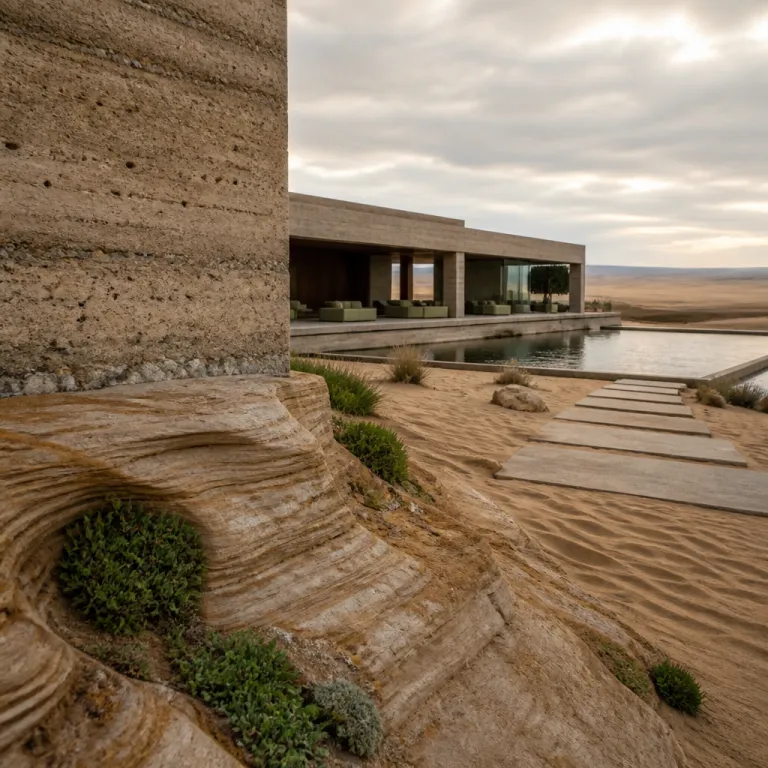
Why a desert luxury hotel view resort feels different from the coast
A true desert luxury hotel view resort is built around absence. The horizon runs unbroken, the desert landscape stretches in every direction, and the sky occupies more of your visual frame than any ocean ever could. At night the same luxury desert panorama flips, and the stars become a second view that feels as curated as any art collection.
In the best luxury desert hotels, architects lean into this emptiness. They orient every room and most rooms’ terraces toward the wadi or dune line, so the first thing you see is not a pool or a path but a sweep of sand and shadow. The silence around each desert resort amplifies small sounds — wind on stone, a distant camel bell, your own footsteps — and that sensory editing is part of the experience you are paying for.
Coastal luxury resorts sell proximity to water, while a luxury desert resort sells distance from almost everything. That distance is why many desert hotels keep a low room count and spread each room or villa across several hectares, especially in places like the wadi desert near Ras Khaimah or the mesas of southern Utah. The result is a property where you feel as if you have rented a private national park, even though you are technically in a hotel with a full resort spa, a fitness center and a staffed pool.
How architects frame silence, heat and horizon in desert hotels
Designing a desert luxury hotel view resort means working with heat as much as with light. Architects in Ras Khaimah, in southern Utah and in Oman’s wadi desert use deep overhangs, thick walls and shaded courtyards to keep each room cool while still opening wide to the desert landscape. The aim is to let you explore the view from bed or from your private pool without feeling the full force of the sun.
Low slung villas at a luxury resort in a khaimah wadi, for example, often echo traditional bedouin encampments. Instead of tents, you get stone and timber, but the spacing between rooms and the orientation toward the wadi desert follow the same logic of shade, breeze and privacy. Many desert hotels now integrate a resort spa under earth berms, so treatment rooms stay naturally cool while still offering a framed slice of luxurious desert sky.
In places like Baja California, where Aman’s Amanvari resort opens at the meeting point of beach, desert and estuary, the architecture plays a different game. Here the luxury hotel must choreograph three views — water, dunes and mountains — and decide which one each room should share with you first. For travelers planning refined celebrations by the sea, it is worth comparing this hybrid desert resort model with more classic coastal venues such as the curated Phu Quoc wedding venues with unforgettable sea views, because the balance between ocean and desert luxury will shape your stay.
Desert destinations redefining luxury: from Ras Khaimah to southern Utah
Some destinations have turned the idea of a desert luxury hotel view resort into a signature. Ras Khaimah, for instance, has positioned its wadi desert as a quieter alternative to Dubai, with each luxury resort set back in the dunes and every pool angled toward the horizon. When you stay in a property in ras khaimah, the drive alone — past khaimah wadi cliffs and open desert — feels like a prelude to the main view.
In the United States, southern Utah has become a laboratory for desert hotels that treat the landscape as the primary amenity. Amangiri is the most cited example, a luxury desert resort where rooms are arranged around a central pool that seems carved from the rock, and every room frames a different slice of mesa and national park wilderness. This is desert luxury stripped back to stone, sky and a few precise lines of concrete, and it has influenced how newer properties across desert hotels in the region think about view first design.
Elsewhere, Morocco’s palm fringed valleys and Namibia’s dune seas offer their own versions of a luxurious desert stay, often with traditional bedouin inspired details and a strong sense of remoteness. If you are drawn to elemental landscapes, you might pair a desert resort stay with another extreme setting, such as a cave hotel carved into stone in Matera, which we review in depth in our guide to refined cave hotels in Italy. Moving between these environments sharpens your sense of how architecture, light and silence interact, and helps you judge which luxury hotel genuinely earns its view premium.
The paradox of luxury in scarcity: water, space and the value of quiet
Luxury in the desert is built on a paradox. You travel into a place defined by scarcity — of water, shade, vegetation — and then pay a premium for a luxury hotel that seems to erase those limits with a pool, a spa and chilled rooms. The best luxury properties do not pretend the desert landscape is a backdrop for a generic resort ; they make the scarcity itself part of the experience.
At a carefully run desert luxury hotel view resort, every complimentary glass of water, every plunge into a pool and every misted terrace is framed by the knowledge that outside the property line, the land is dry and unyielding. This awareness is why many of the best luxury desert resorts now invest heavily in water recycling, solar power and low impact design, especially near fragile national park boundaries. As a guest, you can ask how the resort spa manages its water use, how the fitness center is cooled and how the property supports local communities, including families with traditional bedouin roots.
Space is the other scarce commodity that becomes a form of luxury. Desert hotels often keep fewer rooms than coastal peers, which means more distance between each room and more uninterrupted horizon for you to explore in solitude. When you compare options on a booking platform, look beyond daily breakfast and complimentary transfers, and ask instead how many rooms share each view line, because that ratio tells you how exclusive your slice of desert luxury will feel.
How to choose and book a desert luxury hotel view resort
Choosing the right desert luxury hotel view resort starts with deciding what kind of silence you want. Some travelers prefer the near monastic quiet of a remote wadi desert camp, while others want a luxury resort with a full fitness center, an active pool scene and a resort spa that opens late into the evening. Your own balance between solitude and service will narrow the field faster than any star rating.
When you compare desert hotels, study the site maps as closely as the room photos. Check how many rooms face the primary desert landscape, how many share a single pool and whether any room types sit too close to arrival roads or service areas. If a property mentions traditional bedouin influences, read the details to see whether that means thoughtful design and local partnerships or just a themed tent near the bar.
For solo travelers, a luxury hotel with clear walking paths, attentive but discreet staff and transparent information about transfers often feels more comfortable than an ultra isolated camp. Look for a desert resort that includes daily breakfast, offers complimentary soft drinks or snacks and provides clear guidance on guided hikes so you can explore safely. If you are combining your desert luxury stay with a city break or a skyline focused escape, our guide to refined romantic escapes with scenic retreats near you can help you sequence the trip so that each property’s view — desert, sea or city — feels like a deliberate chapter rather than a random upgrade.
FAQ
What defines a true desert luxury hotel view resort ?
A true desert luxury hotel view resort is defined by its relationship to the surrounding desert landscape rather than by interior décor alone. The best luxury desert properties orient most rooms toward uninterrupted horizons, limit building height and keep generous spacing between units to preserve silence. They also integrate features such as shaded courtyards, water efficient pools and low light pollution so that both day and night views feel intentional.
How do desert hotels manage extreme heat while keeping large windows ?
Desert hotels use a combination of deep overhangs, recessed terraces, high performance glazing and natural ventilation strategies to manage heat. Many luxury resort architects place the largest windows under shaded verandas or within courtyards, so rooms can open to the view without direct sun exposure for most of the day. Some properties also orient buildings along prevailing wind directions, allowing cross breezes to support mechanical cooling and reduce energy use.
Are desert luxury resorts suitable for solo travelers ?
Desert luxury resorts can be excellent for solo travelers who value quiet, space and strong service. When booking, look for a hotel that offers clear transfer options, a responsive concierge and guided activities such as hikes or astronomy sessions, which make it easy to explore safely. A property with a well equipped fitness center, a sociable pool area and communal dining options can also balance solitude with low key human contact.
What should I check before booking a room with a desert view ?
Before booking, study the resort map to see how many rooms share the same view corridor and whether any buildings obstruct the horizon. Ask the hotel which room categories face the primary desert landscape at sunrise or sunset, and whether any units are close to service roads or generators. It is also worth confirming whether your room includes outdoor seating or a plunge pool, because these features can significantly change how you experience the view.
How sustainable can a luxury hotel in the desert really be ?
Sustainability in a luxury hotel in the desert depends on water management, energy sources and construction choices. More responsible desert resorts invest in greywater recycling, solar power, native planting and low impact building footprints that respect local ecosystems and national park guidelines. As a guest, you can ask about these measures in advance and prioritize properties that treat the luxurious desert setting as a resource to protect rather than just a backdrop for marketing.