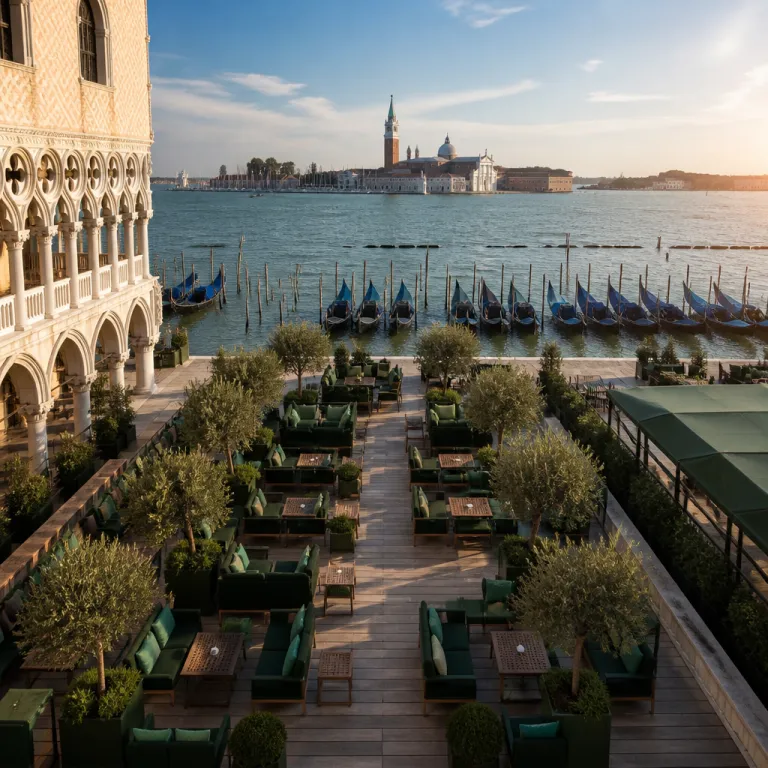
From heritage site to seasons hotel: what the reopening means for lagoon views
Hotel Danieli on Riva degli Schiavoni in Venice is entering a new chapter as Danieli, Venezia, a Four Seasons Hotel, and the change goes far beyond a new sign above the door. For travelers tracking the evolution of hotel Venice icons, this opening signals how a historic heritage site can be reinterpreted as a contemporary luxury hotel without losing the lagoon panorama that made it famous. The hotel will sit at the sharp edge of Venice’s luxury competition, where the right rooms and suites framing San Giorgio Maggiore can decide where couples choose to stay.
The property is formed by three interconnected palaces, including the 15th century Palazzo Dandolo, Palazzo Casa Nuova, and Palazzo Danieli Excelsior, which together have shaped the legend of Hotel Danieli since it first welcomed guests in the nineteenth century. This layered property will now be operated by Four Seasons Hotels and Resorts for Gruppo Statuto, and Four Seasons service standards are expected to recalibrate what travelers expect from hotels and resorts in Italy’s most visited city. According to the joint Four Seasons and Gruppo Statuto announcement, the aim is to “preserve the property’s historic integrity while elevating the guest experience to contemporary luxury expectations,” a statement that anchors the renovation in verifiable intent rather than marketing gloss. For view-focused guests, the key question is simple yet demanding: how will Four Seasons use this architecture to turn a lagoon-facing outlook into a defining part of every stay rather than a rare upgrade?
When reservations for Hotel Danieli Venice Four Seasons 2026 stays open, the property is expected to debut with 120 guest rooms and suites before expanding to 176 keys the following year, figures that match the operator’s published projections. The full inventory will comprise 97 guest rooms and 79 suites, a configuration that clarifies how the phased key counts translate into the final mix of accommodations. Many of these guest rooms and larger suites will offer direct lagoon perspectives, and the top tier Palazzo Grand Dandolo Suite and the upper level Presidential Suite are being positioned as some of the most cinematic windows in the city. For couples planning a first hotel Venice stay or returning to celebrate an anniversary, the promise is that the property will offer not just luxury rooms but a curated sequence of vistas, from sunrise over the water to blue hour reflections off the Palazzo Ducale.
The renovation is framed by a clear objective from the operator: “Restore and modernize Hotel Danieli. Elevate guest experience. Strengthen Four Seasons' presence in Italy.” That ambition matters for travelers because it links the emotional pull of a heritage site with the practical comfort of a modern Four Seasons hotel, including reliable climate control, acoustic insulation, and discreet technology. In a city where some historic hotels trade on nostalgia while compromising on comfort, the Danieli, Venezia positioning suggests that guests will not have to choose between romance and functioning air conditioning.
Location remains the non-negotiable advantage for Hotel Danieli Venice Four Seasons 2026, because the property stands directly on the Riva degli Schiavoni waterfront, a few steps from Piazza San Marco. From here, guests can learn the city by water and on foot, watching vaporetti and wooden water taxis cross the basin while church facades catch the changing light. For couples who plan their luxury hotel stays around views rather than square metres alone, this stretch of promenade is one of the few in the city where the lagoon feels like an extension of the lobby.
For readers comparing top city hotels with strong visual identities, it is useful to think of Danieli, Venezia, a Four Seasons Hotel in the same conversation as other view-led reopenings such as The London on 54th Street, where 562 suites now use Central Park as a permanent backdrop. That New York property shows how a Four Seasons hotel can choreograph city vistas from guest rooms to public spaces, and Danieli, Venezia aims to apply a similar philosophy to water and sky rather than trees and towers. In Venice, the challenge is more delicate because the lagoon outlook is both a private pleasure for guests and a shared cultural asset for the city.
Pierre Yves Rochon’s interiors and the art of framing Venice
The design story behind Hotel Danieli Venice Four Seasons 2026 is led by French interior designer Pierre Yves Rochon, whose work for Four Seasons in Florence and Paris has already shown how historic architecture can host contemporary luxury. At Danieli, Venezia, a Four Seasons Hotel, his brief is not only to refresh rooms and suites but to use light, glass, and colour to frame Venice itself as the main artwork. For travelers who book hotels and resorts specifically for their interiors as much as their outlooks, this project will be a test of how far a luxury hotel can go in choreographing the way guests see the city.
Inside the Palazzo Dandolo, the four-level pink marble atrium with its gilded staircase will remain the theatrical heart of the property, and Pierre Yves Rochon is expected to emphasise vertical views as much as horizontal ones. Murano glass chandeliers, terrazzo floors, and Italian marble will be combined with mirrors and reflective surfaces so that the lagoon and the city skyline appear in unexpected angles as guests move through the Four Seasons hotel. This is where the renovation moves beyond cosmetic refresh and into a more ambitious idea: the property will use its interiors to extend the experience of Venice even when guests are not at a window or on a terrace.
Guest rooms and suites at Hotel Danieli Venice Four Seasons 2026 will be configured with a more residential layout, including separate living areas in many rooms and suites that face the lagoon or the narrow calli behind the palaces. The operator has confirmed that the hotel will offer 97 rooms and 79 suites once the full key count is reached, and a significant proportion of these accommodations will provide some form of lagoon or city view. For couples, that means more chances to secure a room where the first thing you see on waking is a line of gondolas rocking gently below the Riva degli Schiavoni.
For travelers who track opening-late announcements, the phased schedule matters because it shapes availability and rate dynamics in the first months. Early stays at Danieli, Venezia will likely feel more intimate, with 120 keys and a smaller number of occupied floors, while later visits will experience the full scale of the resort-like complex across all three palaces. In both phases, Four Seasons service will be the constant, with teams trained to anticipate how guests use their rooms when the main amenity is the outlook rather than a long list of on-site activities.
Dining will play a central role in how the property will offer views to non-resident guests as well as those staying overnight, especially at the rooftop Restaurant Terrazza Danieli. Here, Executive Chef Adriano Rausa, named in the official reopening materials, will work with ingredients from the lagoon, including produce from Sant’Erasmo island, while couples sit at tables that look directly across to San Giorgio Maggiore and the Lido. For many visitors, a reservation here may be their first contact with the new Danieli spa and dining ecosystem, and the way the restaurant handles both food and sightlines will influence how the wider city perceives the reopening.
Wellness is being rethought too, with plans for a refined Danieli spa concept that respects the building’s heritage while introducing contemporary treatments and a compact fitness area. In a dense city where space is limited, the spa will not compete with resort-scale facilities in the Maldives, but it will offer a quiet counterpoint to the intensity of the streets outside. For couples returning from a day of walking between heritage landmarks such as the Basilica di San Marco and the Rialto, the ability to step into a calm, well-designed spa before returning to their rooms can be as valuable as another lagoon-facing balcony.
For readers who follow global openings, the Danieli project sits alongside other heritage renovations that place views at the centre of the narrative, such as the reimagined London property mentioned earlier or the new generation of Kyoto view hotels that reinterpret ryokan windows and contemporary architecture. A detailed look at Kyoto’s new view hotels, from traditional inns to Kengo Kuma’s Capella, shows how different cultures use framing, gardens, and seasonal light to shape guest perception, and Danieli, Venezia, a Four Seasons Hotel will bring a distinctly Venetian version of that conversation to Europe. The common thread is clear: when a luxury hotel treats the window as seriously as the bed, guests feel that the property understands why they travelled in the first place.
How Danieli, Venezia, a Four Seasons Hotel reshapes Venice for view led travelers
For couples planning a first stay at Hotel Danieli Venice Four Seasons 2026, the practical question is how this property compares with other top city hotels in Venice and beyond. Aman Venice offers a quieter, canal-facing experience on the Grand Canal, while future arrivals from brands like Rosewood will add more competition at the top of the market. Danieli, Venezia, a Four Seasons Hotel positions itself differently: it is not hidden in a side canal but stands directly on the lagoon, turning every arrival and departure into a small piece of theatre.
The hotel will appeal strongly to travelers who already curate their itineraries around hotels and resorts with exceptional views, whether that means a ship like the Orient Express Corinthian with its 54 suites and infinite horizon or an urban tower with a skyline panorama. On our platform, we see couples increasingly willing to adjust travel dates so that they can secure specific rooms and suites with the right orientation rather than simply the highest category. In that context, the way Hotel Danieli Venice Four Seasons 2026 manages inventory for lagoon-facing guest rooms will be watched closely by view-obsessed travelers who have learned from experience that not all water-facing rooms are equal.
Booking strategy will matter, because the opening late in the summer season coincides with peak demand for Venice and for Italy more broadly. Travelers who want the most sought-after rooms and suites, such as the Palazzo Grand Dandolo Suite or the top floor Presidential Suite, should plan to reserve well ahead and work directly with the Four Seasons hotel team to understand exact layouts and view corridors. For many couples, the sweet spot may be mid-category guest rooms that still offer a strong lagoon outlook but sit just below the highest price tier, delivering a better balance between budget and spectacle.
Beyond the rooms, the property will offer a sequence of public spaces where guests can learn the rhythm of the city without leaving the building, from the lobby that opens directly onto the Riva degli Schiavoni to upper-floor corridors with glimpses of church domes and terracotta roofs. These spaces matter because they allow travelers to experience Venice in different moods, including early morning when delivery boats criss-cross the basin and late evening when the last cruise tenders have departed. For couples who value quiet observation as much as sightseeing, the ability to move through the hotel and encounter varied views can be as rewarding as a formal excursion.
From a broader perspective, the arrival of Danieli, Venezia strengthens Four Seasons’ footprint in Italy and signals continued investment in historic city properties rather than only resort destinations. The brand already operates hotels and resorts in Florence and Milan, and the addition of a flagship luxury hotel in Venice completes a triangle of urban experiences that can be combined in a single itinerary. For American travelers in particular, this makes it easier to plan a multi-city journey where Four Seasons service and design language provide continuity while each property offers a distinct sense of place.
For Venice itself, the reopening of Hotel Danieli under Four Seasons management raises questions about how heritage buildings are used in a city under pressure from mass tourism. Supporters argue that a carefully managed luxury property will bring higher-spending guests who stay longer and engage more deeply with local culture, including artisans on Murano and producers on Sant’Erasmo. Critics worry about further concentration of wealth along the Riva degli Schiavoni, yet the use of traditional Venetian craftsmanship in the renovation suggests an attempt to keep value within the lagoon economy.
For couples reading this on a luxury and premium booking website for hotels with views, the key takeaway is that Danieli, Venezia, a Four Seasons Hotel is being shaped as a place where the view is not an afterthought but the organising principle. Every element, from Pierre Yves Rochon’s interiors to the positioning of Terrazza Danieli and the design of the Danieli spa, is being calibrated around how guests see and feel the lagoon and the city beyond. If the execution matches the ambition, Hotel Danieli Venice Four Seasons 2026 will offer one of the most complete lagoon-view experiences in Europe, and a new benchmark for how historic hotels can be renewed without losing the vistas that made them legendary.