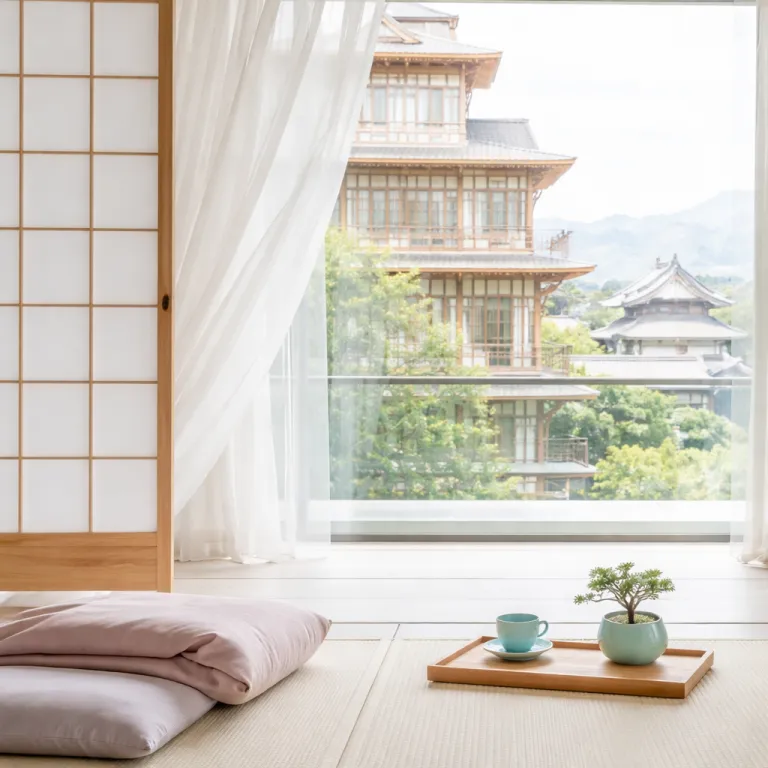
The Kyoto view philosophy: when a window becomes a composition
In Kyoto, a luxury hotel view is never just scenery beyond a pane of glass. The most considered properties in this city treat every window as a frame where shakkei, or borrowed landscape, turns distant mountains, temple roofs and rivers into part of the room. When you plan a stay in Kyoto, understanding this view philosophy often matters more than counting amenities.
Traditional Japanese inns taught Kyoto’s hotels how to choreograph light, shadow and garden perspectives. A modern luxury hotel in Kyoto now borrows that language, aligning rooms so that a single maple tree or stone lantern anchors the entire outlook. This is why the most memorable Kyoto luxury hotel stays feel curated for your senses rather than designed only for social media.
Across Kyoto, luxury hotels and classic ryokan use sliding shoji, engawa verandas and low seating to keep your eye level close to the garden. In the right hotel panorama, the city recedes and the composition becomes moss, water and sky. When you compare hotels across Kyoto, focus less on floor height and more on how the architecture edits what you see.
Shakkei and the art of borrowed scenery
Shakkei means the hotel view intentionally includes something beyond its own walls. In Kyoto, that might be Higashiyama’s ridgeline, a pagoda spire or the slow curve of the Kamogawa River. A true high-end property in this city will orient rooms so those borrowed elements feel inevitable, not accidental.
Some Kyoto hotels use inner courtyards to create intimate, almost theatrical vistas. Others, especially riverside luxury hotels, stretch the gaze outward to the mountains that ring the city. When you evaluate any Kyoto hotel for its outlook, ask how the property uses shakkei in both public spaces and private rooms.
Japanese design also plays with partial concealment, so not every deluxe room reveals its full view at once. A corridor turn, a noren curtain or a low sofa can stage a slow reveal that heightens your senses. This is where Kyoto’s top-tier stays feel different from many other city hotels in Japan, because the view is treated as a narrative rather than a static backdrop.
From tatami to glass: traditional versus modern framing
Traditional Kyoto layouts keep you close to the floor, which changes how you read the garden. When you sit on tatami, the horizon line drops and the view becomes a scroll painting, with every stone and pine carefully placed. Modern luxury hotels in Kyoto sometimes forget this, raising beds and sofas so high that the composition loses intimacy.
The best Kyoto luxury properties now blend traditional and contemporary framing in the same rooms. You might have a low daybed facing a courtyard and a taller armchair angled toward the city skyline, giving two distinct perspectives for different moods. When comparing Kyoto hotels, look for floor plans and photos that show multiple sightlines rather than a single postcard angle.
For travelers who care about skyline perspectives worldwide, a useful reference is a curated guide to exceptional hotels with great views for skyline lovers and scenic stays. Apply the same critical eye in Kyoto, asking whether the architecture respects traditional Japanese ways of seeing or simply installs larger panes of glass. That question will quickly separate marketing promises from genuinely well-composed outlooks.
Capella Kyoto and the new generation of view-led luxury
Capella Kyoto sits in Miyagawa-cho, one of Kyoto’s historic geisha districts, and treats the surrounding city as part of its design palette. Architect Kengo Kuma and Associates shaped this luxury hotel so that alleys, lanterns and tiled roofs become layers in the view from many rooms. For travelers seeking a Kyoto stay with strong architectural intent around views, this is a defining property.
The hotel’s 89 rooms are arranged to balance privacy with connection to the city (room count as reported in early design coverage by Wallpaper*). Some rooms frame intimate inner gardens that echo traditional machiya townhouses, while others open toward Higashiyama’s slopes and the wider Kyoto skyline. The result is a collection of room types where each category offers a distinct relationship between guest, city and landscape.
Inside, materials such as timber, stone and textured paper soften the transition between interior and exterior. This tactile approach means the senses register the view not only through sight but also through how light hits surfaces and how sound is absorbed. Capella Kyoto shows that a modern luxury hotel can feel deeply Japanese without simply copying historic motifs.
Miyagawa-cho character translated into views
Miyagawa-cho is a working geisha district, so the surrounding streets are narrow, layered and alive at night. Capella Kyoto uses this context to create views that feel cinematic rather than purely panoramic, with glimpses of lantern light and tiled eaves instead of wide-open vistas. For many solo travelers, this kind of intimate city view feels more authentically Kyoto than a distant mountain panorama.
The hotel’s public spaces also practice shakkei in a contemporary way. Lounges and restaurants often align sightlines so that a single maple, a rooftop line or a sliver of Higashiyama anchors the composition beyond the glass. When you book, ask which rooms lean into these layered city views and which prioritize quieter garden perspectives.
Capella Kyoto’s spa continues the theme, using screens and courtyards to filter light and frame small pockets of greenery. Here, the view is about calming the senses rather than showcasing the city, which suits the contemplative side of Kyoto. For a view-focused itinerary, pairing a city-facing room with time in this spa creates a balanced visual experience.
Positioning Capella among Kyoto’s luxury hotels
Kyoto now counts well over one hundred upscale and luxury-oriented hotels, but only a subset truly build their identity around views (broad estimate based on major booking platforms’ “luxury” filters; exact numbers fluctuate). Capella Kyoto stands alongside Ritz-Carlton, Kyoto and Imperial Hotel, Kyoto as part of a new wave of properties that blend modern design with traditional Japanese sensibilities. Among these, Capella feels the most tightly woven into its immediate streetscape.
Ritz-Carlton, Kyoto, set on the Kamogawa River, offers broader river and mountain vistas, while Capella Kyoto offers more intimate urban compositions. Imperial Hotel, Kyoto, created within a revived former geiko theatre, adds another layer by framing its own historic architecture as part of the view. When choosing between these luxury hotels, decide whether you want the city to feel close and textural or wide and cinematic.
For travelers who collect view-led stays across continents, it can be useful to compare Kyoto’s offerings with other destinations known for dramatic perspectives, such as hotels with Niagara Falls views. Kyoto’s strength is not raw spectacle but the way properties like Capella Kyoto choreograph subtle shifts of light and season. That nuance is what will stay with you long after checkout.
Rivers, mountains and gardens: mapping Kyoto’s view zones
Kyoto’s topography quietly dictates which kind of view you will wake up to. The city sits in a basin ringed by low mountains, with the Kamogawa River slicing north to south and districts like Higashiyama climbing gently toward temple-lined slopes. Understanding these view zones helps you match your stay plans to the panorama you value most.
Along the Kamogawa, hotels such as Ritz-Carlton, Kyoto use the river as a reflective foreground with mountains beyond. Here, rooms on higher floors capture long perspectives, while lower rooms trade distance for a stronger connection to the water and riverside path. If your ideal Kyoto outlook includes joggers, herons and seasonal riverbank greenery, this corridor is your best starting point.
In Higashiyama, many Kyoto hotels sit closer to temples and shrines, so the view becomes steeper and more vertical. You might see tiled roofs stepping up the hillside, with pagodas and cedar forests layered behind. For travelers who want luxury stays that feel anchored in heritage rather than the modern city grid, this zone delivers.
Ritz-Carlton, Kyoto and the river axis
Ritz-Carlton, Kyoto occupies a prime stretch of the Kamogawa, and its architecture leans into that axis. Many rooms face the river directly, with floor-to-ceiling windows framing water, cyclists and the distant hills that define Kyoto’s skyline. At sunrise and sunset, the light skims across the surface, turning a simple hotel view into a daily ritual.
The property’s gardens and courtyards also practice a refined version of shakkei. Inner spaces borrow the river’s presence indirectly, using sound and glimpses through corridors to keep you aware of the water even when you are not looking straight at it. This layered approach makes Ritz-Carlton, Kyoto one of the strongest options for travelers who want both urban energy and natural calm.
When comparing river views in Kyoto with other global cityscapes, think of how New York hotels frame Central Park or the Hudson. A useful benchmark is a guide to NYC hotels with skyline and park views, which shows how different properties prioritize water, greenery or towers. In Kyoto, the equivalent choice is between river, garden and temple slope, each offering a distinct rhythm to your stay.
Imperial Hotel, Kyoto and revived heritage views
Imperial Hotel, Kyoto occupies a former geiko theatre, which gives it an unusual relationship with its surroundings. Rather than chasing height, this luxury hotel focuses on framing its own restored architecture and nearby streets as part of the view. Many rooms look onto courtyards where the theatre’s lines and textures become the main visual event.
This approach suits travelers who value a strong sense of place over sweeping panoramas. The hotel’s windows often capture details such as tiled roofs, lanterns and narrow alleys, reminding you that you are in a living Kyoto neighborhood, not an abstract resort zone. For a view-centric stay that feels grounded in history, this property deserves close attention.
Imperial Hotel, Kyoto also demonstrates how modern and traditional elements can coexist without visual noise. Clean-lined interiors act as a calm frame for the more intricate exterior forms, allowing your senses to rest on one focal point at a time. That restraint is a hallmark of the most successful Kyoto luxury hotels.
Traditional ryokan style stays where gardens lead the layout
While large luxury hotels dominate international headlines, Kyoto’s most view-obsessed stays often hide behind noren curtains. Traditional ryokan-style properties and smaller Kyoto conversions still design every room around a single garden, pond or courtyard. For solo travelers who want an experience rooted in Japanese tradition, these stays can be transformative.
In such properties, the room layout follows the garden rather than the other way around. Sliding doors, tatami mats and low tables are positioned so that your primary sightline always returns to a carefully composed scene outside. This is where the concept of ichigo ichie, one moment one encounter, becomes tangible through the view.
Because many of these stays are not part of global hotel-resort brands, you will need to read floor plans and photos closely. Look for images where the futon or bed faces the garden directly, and where the engawa veranda acts as a threshold between interior and exterior. Those details signal a property that understands Kyoto luxury as a sensory composition, not just a price point.
How ryokan design sharpens the senses
Traditional Japanese rooms are intentionally sparse, which heightens your awareness of the view. With fewer distractions inside, the sound of rain on the garden, the movement of maple leaves or the reflection of clouds in a pond become central to your stay. This is a different kind of luxury hotel experience, one that works on the senses slowly rather than impressing at first glance.
Lighting plays a crucial role in this design language. Soft, indirect lamps keep the interior dim enough that the garden remains the brightest element, drawing your eye outward. When you compare such spaces with more modern Kyoto hotels, you will notice how often contemporary rooms over-illuminate interiors and flatten the view.
For travelers planning time in Kyoto, consider pairing one or two nights in a traditional ryokan-style property with a few nights in a larger luxury hotel. The contrast between garden-centric and city-centric views will deepen your understanding of Kyoto’s hospitality culture. It also ensures your visual memories include both quiet moss gardens and the glow of the urban skyline.
Balancing tradition with modern comfort
Not every traveler wants to sleep on futons or navigate shared baths, even in Kyoto. Fortunately, a growing number of luxury hotels now borrow ryokan principles while offering modern beds, private bathrooms and advanced climate control. These hybrid properties often deliver some of the city’s most satisfying views.
In such hotels, you might find tatami-lined sitting areas facing a garden, with a raised sleeping platform tucked discreetly behind. The key is that the primary seating still orients toward the view, preserving the traditional hierarchy of space. When evaluating these options, pay attention to how many rooms actually face the garden versus internal corridors or neighboring buildings.
For a view-focused search, filter your shortlist by properties that mention inner gardens, courtyards or Higashiyama-facing rooms. Then, cross-check guest photos to confirm that the promised views match reality. This extra step can mean the difference between a stay remembered for its serenity and one remembered for its missed potential.
Seasonal strategy: matching Kyoto’s views to the calendar
Kyoto’s views change dramatically with the seasons, and your choice of luxury hotel should change with them. Cherry blossom weeks, peak autumn foliage and quiet winter snow each reward different locations, room orientations and even floor levels. A thoughtful view strategy starts with the calendar, not the brand list.
During cherry blossom season, riverside and canal-side hotels in Kyoto come into their own. Properties near the Kamogawa or Philosopher’s Path offer rooms where petals drift across the water, turning the view into a moving painting. In this period, book early and prioritize lower floors or garden-level rooms where blossoms fill the frame rather than appearing as a distant pink band.
Autumn shifts the focus to Higashiyama and the temple slopes, where maples ignite the hillsides. Kyoto hotels with east-facing rooms or proximity to famous gardens can deliver extraordinary foliage views at sunrise and sunset. For travelers who value color and texture, this is often the most rewarding time for a luxury stay in the city.
Winter clarity and summer haze
Winter in Kyoto brings crisp air and clear sightlines, which favor higher floors and broader panoramas. Luxury hotels such as Ritz-Carlton, Kyoto and other river-facing properties benefit from snow-dusted mountains and sharp outlines of temple roofs. If your ideal view includes clean geometry and quiet streets, this season is underrated.
Summer, by contrast, often brings humidity and haze that soften distant views. In this period, inner gardens, shaded courtyards and spa-level perspectives become more appealing than far-reaching cityscapes. Kyoto luxury hotels that invest in lush internal landscaping and water features will feel more comfortable and visually satisfying.
When planning a stay, consider how your own senses respond to different seasons. Some travelers crave the intensity of cherry blossoms and autumn leaves, while others prefer the contemplative calm of winter light. Aligning your booking window with your visual preferences is as important as choosing the right hotel brand.
Booking timing and rate patterns for view rooms
Kyoto’s popularity means that the best view rooms in luxury hotels rarely sit empty. For peak blossom and foliage periods, booking a view-focused room three to six months ahead is often necessary, especially for riverfront or Higashiyama-facing categories. Flexible solo travelers sometimes find last-minute openings, but relying on that for a specific outlook is risky.
Rates typically spike on weekends and during national holidays, so midweek stays can offer better value for the same view category. Some Kyoto hotels quietly release additional deluxe view rooms closer to arrival if group bookings do not materialize, but this varies by property. Signing up for hotel newsletters or loyalty programs can occasionally surface these opportunities.
When negotiating or selecting room types, ask specifically about orientation, floor level and any potential obstructions. A room described as river view or city view can still face a bridge, a neighboring wall or a less photogenic section of skyline. Detailed questions signal that you are a serious guest, and in a service culture like Japan’s, that often leads to more thoughtful room assignments.
Practical booking tactics for Kyoto’s view-obsessed traveler
Securing the right Kyoto luxury hotel view requires more than clicking the highest room category. Many properties use broad labels such as “deluxe city view” or “premium river view” that hide significant differences between individual rooms. A strategic approach will help you translate those labels into the actual sightlines you want.
Start by studying floor plans and guest photos, not just official marketing images. Look for how many rooms share your desired orientation and whether any are set back, angled or partially blocked. This groundwork is especially important in dense city districts where even luxury hotels must negotiate neighboring buildings.
Once you have a shortlist, contact the hotel directly by email or phone. Explain that the view is your priority and reference specific room numbers or floors if available, which shows you have done your research. In Kyoto’s service culture, such clarity often leads to more precise recommendations and, when possible, better assignments.
Working with brands and independent properties
Global brands such as Ritz-Carlton, Kyoto, Park Hyatt Kyoto or Hyatt Regency Kyoto tend to have more standardized room categories. This can make it easier to predict the quality of a city-view or river-view room, especially when combined with loyalty program benefits. However, it can also mean less flexibility in customizing your exact position within the building.
Independent Kyoto hotels and smaller luxury-collection properties may offer more idiosyncratic layouts. In these cases, a direct conversation with reservations can reveal hidden gems, such as corner rooms with dual aspects or lower floors with unexpectedly strong garden views. For a trip centered on memorable vistas, mixing one branded stay with one independent stay can balance predictability and surprise.
When evaluating any collection hotel or member of a luxury consortium, pay attention to how much of the marketing language centers on views versus generic luxury. Properties that lead with their relationship to Higashiyama, the Kamogawa or inner gardens are more likely to deliver on your visual expectations. Those that emphasize only spas, restaurants and room size may treat the view as an afterthought.
Reading between the lines of room descriptions
Room descriptions often contain subtle clues about the real quality of the view. Phrases such as “partial view,” “city aspect” or “courtyard outlook” can signal more modest sightlines, while direct references to specific landmarks usually indicate stronger compositions. In Kyoto, mentions of Higashiyama, the Kamogawa or temple roofs are particularly promising.
Guest reviews can also help, but read them with a critical eye. Focus on comments from travelers who mention room numbers, floor levels and orientation, as these details are more actionable than general praise. When multiple guests highlight the same room stack or wing for its views, you have found a reliable target for your booking request.
Ultimately, a successful stay for view-obsessed travelers comes down to preparation and communication. The more precisely you can articulate your ideal Kyoto window scene, the easier it becomes for hotels to match you with the right room. In a city where Japanese hospitality prizes attentive service, that clarity is a powerful tool.
How Kyoto compares to other view-driven destinations
Kyoto will never compete with cities like Hong Kong or Dubai on sheer skyline drama, and that is precisely its strength. Here, the luxury hotel view is about proportion, texture and the dialogue between modern and traditional forms. For travelers who have already collected big-city panoramas, Kyoto offers a more nuanced visual experience.
In places such as New York or Tokyo, high-rise hotels often chase altitude as a proxy for quality. Kyoto’s building height restrictions and historic fabric force hotels to think horizontally instead, working with gardens, rivers and low mountains. This constraint has produced some of the most thoughtful view compositions in any major city.
For a traveler planning a global circuit of view-led stays, Kyoto sits comfortably alongside destinations like Venice, Florence or Quebec City. Each offers a layered, historically rich skyline best appreciated from mid-level vantage points rather than extreme heights. A Kyoto hotel stay can therefore act as a counterpoint to more vertical city experiences.
Learning from Kyoto for future trips
Once you have experienced how Kyoto luxury hotels compose views, you may find yourself applying the same criteria elsewhere. You will start asking whether a hotel in another city frames a park, a river or a historic building with similar care. Over time, this habit sharpens your eye and makes every travel decision more intentional.
Kyoto also demonstrates the value of aligning architecture, interior design and landscape design around a single visual concept. Properties like Capella Kyoto, Ritz-Carlton, Kyoto and Imperial Hotel, Kyoto show how consistent thinking across disciplines produces coherent, memorable views. When you encounter hotels that feel visually scattered, it is often because this alignment is missing.
As you plan future stays, consider building itineraries around destinations where view culture runs deep, not just where the skyline is famous. Kyoto belongs firmly in that category, alongside select alpine resorts, lakeside towns and riverfront capitals. For the solo explorer, this approach turns every window into a lens on how a place understands itself.
Kyoto’s expanding luxury inventory and what it means for views
Kyoto’s luxury hotel inventory has expanded significantly in recent years, with new openings such as Capella Kyoto and Imperial Hotel, Kyoto joining established names. Public reporting suggests both properties opened in the mid-2020s, though exact launch dates and room counts should be confirmed with the hotels themselves or current news sources. This growth increases choice but also raises the stakes for properties to differentiate themselves through view quality.
As more hotels enter the market, expect a clearer split between those that treat views as a marketing checkbox and those that embed them into the core design. The latter group will likely continue to attract travelers willing to plan trips around specific rooms and seasons. For anyone pursuing a view-forward Kyoto stay, this is an encouraging trend.
In this evolving landscape, platforms dedicated to view-centric travel, including specialist stay guides, become valuable filters. They help identify which Kyoto luxury hotels genuinely prioritize composition, light and seasonal change. Using such resources alongside your own research will keep your experiences aligned with your visual standards.
Key figures and view-centric Kyoto statistics
- Recent snapshots of major booking and review platforms show roughly 120–130 properties in Kyoto tagged under “luxury” or equivalent categories; the exact count shifts as hotels open, close or rebrand, so treat any single figure (such as 124) as an approximate indicator rather than a fixed total (check current listings on sites like Tripadvisor or Booking.com for up-to-date numbers).
- Capella Kyoto is widely reported in design media, including Wallpaper*, as featuring 89 rooms, a relatively intimate scale that allows more precise control over orientation and view quality compared with larger city hotels (verify on the official hotel site for the latest configuration).
- Imperial Hotel, Kyoto has been described in early coverage as offering around 55 guest rooms, reinforcing its character as a heritage-focused luxury property where many rooms can be individually tuned to frame courtyards and restored architecture (again, confirm with current hotel information, as room counts can evolve).
- Recent openings such as Capella Kyoto and Imperial Hotel, Kyoto reflect a broader trend in Japan toward reviving historical sites into luxury accommodations that blend modern design with traditional view philosophies, as noted in hospitality and architecture press.
- Among Kyoto’s luxury hotels, only a small subset explicitly highlight shakkei, inner gardens or specific mountain and river axes in their marketing; scanning official hotel descriptions for these terms is a useful indicator when shortlisting properties for a view-led stay.
FAQ about Kyoto luxury hotel views
What are the newest luxury hotels in Kyoto with notable views ?
Recent high-end openings in Kyoto include Capella Kyoto and Imperial Hotel, Kyoto, both created within historically significant sites. Capella Kyoto, designed by Kengo Kuma and Associates, uses its Miyagawa-cho location to frame layered urban and garden views. Imperial Hotel, Kyoto, housed in a revived former geiko theatre, focuses on intimate courtyards and heritage architecture as the core of its view experience.
Which Kyoto luxury hotels offer the strongest river and mountain views ?
Ritz-Carlton, Kyoto is a key reference point for river and mountain views, thanks to its position along the Kamogawa with clear sightlines to the surrounding hills. Many rooms and public spaces face the water directly, turning the river into a constant visual companion. Other properties along the same corridor offer similar orientations, but Ritz-Carlton, Kyoto remains one of the most consistent choices for this specific combination.
How far in advance should I book a view room in Kyoto ?
For peak cherry blossom and autumn foliage periods, booking a view-focused room in Kyoto’s luxury hotels three to six months ahead is prudent. Riverfront and Higashiyama-facing rooms sell out first, especially on weekends and during national holidays. Outside these peaks, one to two months is often sufficient, but specific room stacks with the best views can still be limited.
Are garden views or city views better for a first stay in Kyoto ?
For a first stay in Kyoto, many travelers find that a garden view offers a calmer introduction to Japanese aesthetics. Garden-facing rooms highlight traditional design principles such as shakkei and ichigo ichie, while still keeping you close to the city. If you plan multiple nights, combining a garden-view stay with a river or Higashiyama-facing room gives a more complete sense of Kyoto’s visual character.
What are the newest luxury hotels in Kyoto ?
According to recent hospitality reporting, Capella Kyoto and Imperial Hotel, Kyoto are among the notable new luxury openings in the city, both launched in the mid-2020s. These two properties represent a new generation of Kyoto hotels that blend modern architecture with revived historical sites. Their arrival has raised the bar for how new hotels in Kyoto integrate views, heritage and contemporary comfort; always confirm current opening details with official sources, as timelines and branding can evolve.