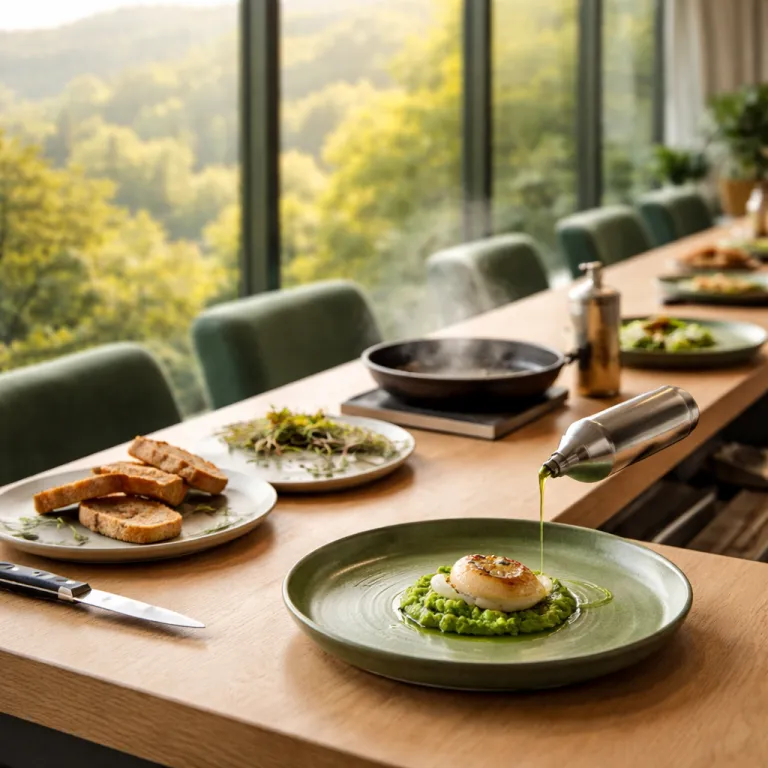
Why the best hotel restaurants with views now drive the booking
In the new luxury landscape, the best hotel restaurants with views are no longer side amenities; they are often the main reason you confirm a stay. For many solo explorers and design-focused travellers, the promise of exceptional food paired with a precise view at dinner will outweigh almost any spa menu or suite upgrade, because the dining room becomes the one place where the entire travel story comes into focus. When you choose a hotel today, you are frequently choosing the restaurant first and the room second, especially when the dining space is calibrated to the exact moment of sunset.
Across high-end properties worldwide, hotel restaurants have evolved into independent destinations where the view is curated as carefully as the wine list. According to the Hospitality Industry Report 2023, food and beverage revenue now accounts for roughly 30–40% of total income at many luxury hotels, with panoramic dining rooms outperforming other outlets. Recent Condé Nast Traveler round-ups of view-led hotel dining and Forbes Travel Guide reports on sky-high restaurants both note that venues with serious culinary ambition attract local diners who might never stay the night but still treat the place as their favourite address in town. For you as a guest, that means the best table in the restaurant can be harder to secure than a good room category, so your booking strategy must now include both the bed and the plate.
When you search for the best hotel restaurants with views, you are really asking which places align their kitchen, architecture and landscape into one coherent experience. A great restaurant view is not just a wide panorama; it is a framed perspective that changes with time, weather and light, turning every visit into a slightly different performance. The most rewarding hotels understand that a solo traveller might spend more time in the restaurant than in the lobby, so they design the room, the menu and even the pacing of service around that single elevated place at the window where food, view and atmosphere meet.
Where the table is tougher than the room: three view led dining rooms
Some of the best hotel restaurants with views now operate on a simple rule: if you have not booked weeks ahead, you will probably be eating room service. At The Sky Room, perched above La Valencia Hotel in La Jolla, the restaurant pairs classic coastal food with a Pacific view that feels almost theatrical, and locals treat it as their default special-occasion place rather than a hotel annex. A typical evening might start with oysters or local halibut crudo, followed by grilled sea bass or a dry-aged steak in the $40–$70 range, timed so that the main course lands just as the last light drops behind the water.
Sea & Sky, the penthouse restaurant at Hotel La Jolla, has followed a similar path after its reimagining, turning its elevated dining room into a magnet for sunset seekers who plan their entire evening around that last band of light over the ocean. Here, a solo traveller might order a seasonal tasting menu with wine pairings, while couples share plates of coastal Mediterranean dishes that echo the shoreline below. In Ballantyne, Hestia has quickly become a rooftop reference point, where the restaurant layout gives almost every table a clean line to the horizon, even if that means the kitchen works a little harder behind the scenes. These are the properties where a solo traveller will happily build an entire trip around one dinner reservation, because the combination of good food and a carefully staged view removes any need for extra entertainment.
Hotels like Le Provençal on the Giens peninsula and Badrutt's Palace Hotel in St. Moritz extend the idea further, using their restaurants as living postcards that compress sea, mountain and sky into a single, lingering course. When you read about three Michelin star chefs collaborating in Venetian palazzi, or about coastal resorts turning their terraces into culinary stages, you are really seeing the same pattern play out at different latitudes. The dining room becomes the one place where architecture, gastronomy and landscape negotiate for your attention, and the best properties know exactly when to let the view fall quiet so the plate can speak. As one Italian hotelier recently noted in a Condé Nast Traveler interview, “If the sunset is the opening act, the food must be the reply that keeps guests at the table long after the sky has gone dark.”
How architects choreograph light, kitchen flow and the view
Behind every memorable table in the best hotel restaurants with views, there is an architect who has argued for glass, orientation and elevation against the eternal constraints of kitchen efficiency. The most successful dining rooms are not the ones with the biggest windows; they are the ones where the restaurant faces the exact angle where the sunset drops behind a ridge or between two towers, turning a simple dinner into a timed event. That means the plan of the hotel often bends around the restaurant, with service corridors and back-of-house spaces compressed so that guests can sit in the one place where the landscape performs.
Design teams now talk about seasonal light choreography, mapping how the view will change through the year and how that will affect the feel of the room at different times of day. In mountain hotels such as Badrutt's Palace Hotel, the restaurant might be angled to catch the first alpenglow on the peaks, while in coastal properties like Le Provençal the priority is the long, horizontal fade of the Mediterranean at dusk. These decisions affect everything from where the sommelier stands to how far servers must travel with plates, and the best architects accept longer routes if it means every guest can look up from their food and see something quietly extraordinary.
For travellers comparing hotels online, this design work is often hidden behind vague promises about a “sea view” or “city skyline”. To read those claims intelligently, you need to understand how the restaurant is positioned within the building, not just whether the hotel faces the water or the mountains. A practical way to decode this is to study floor plans, guest photos and specialist guides that explain how to read a hotel's view promise before you book, so your chosen place for dinner actually aligns with the panorama you have in mind and the time of day you prefer to eat.
Solo at the window: when food and view become your only companions
For the solo explorer, the best hotel restaurants with views offer something rare: a setting where you never feel like the only person without a companion at the table. When the restaurant has been designed so that every seat faces a compelling view, your attention naturally moves between the plate, the horizon and the quiet theatre of other guests, which makes time alone feel like a privilege rather than a compromise. In these rooms, a good maître d'hôtel will instinctively place solo diners at the best angles, understanding that the view is part of the conversation.
Hotels that take solo travellers seriously think carefully about how the bar, counter seating and window tables interact, so that you can choose between anonymity and gentle interaction. A high stool at the edge of Sea & Sky or Hestia can feel like a private box at a performance, where you can linger over food, watch the sunset and still exchange a few words with the bartender if you wish. The Sky Room, with its elevated perspective over La Jolla, shows how a restaurant can make a single guest feel anchored in the scene, simply by aligning the chair, the plate and the view into one continuous line.
From a practical standpoint, solo diners often have more flexibility to secure last-minute reservations at these high-demand places, especially at off-peak times or at the bar. That flexibility is a powerful tool when you travel, because it allows you to build your day around the one dinner that matters without locking every hour into a rigid schedule. When you find a hotel where the restaurant understands this rhythm, you gain a reliable base, a place you can return to each evening knowing that the combination of food and view will reset the entire trip.
From farm to frame: when terroir and panorama tell the same story
The most compelling best hotel restaurants with views use the landscape outside the window as a prologue to the story on the plate. When you sit down at a restaurant overlooking the Giens peninsula at Le Provençal, the view of the sea, the pine-covered cliffs and the distant islands prepares you for a menu built around local fish, herbs and vegetables that could only come from that narrow strip of coast. In St. Moritz, Badrutt's Palace Hotel uses its mountain-facing dining rooms to frame a different narrative, where alpine cheeses, game and high-altitude wines echo the peaks that dominate every line of sight.
These hotels work closely with local farmers, fishermen and producers, turning the restaurant into a kind of edible map of the surrounding region. The best chefs understand that when a guest has spent the day looking at vineyards, markets or fishing harbours, they arrive at dinner ready to taste those same places in a more concentrated form. This is where farm-to-table stops being a slogan and becomes a precise alignment between what you see, what you eat and how you remember the trip long after you have checked out of the hotel.
Industry observers now talk about “experiential dining” as if it were a trend, but in these properties it is simply the logical outcome of taking both food and view seriously. The Hospitality Industry Report 2023 notes that hotels with strong restaurant concepts and panoramic settings report higher guest satisfaction scores and repeat-visit intent, while Condé Nast Traveler and Forbes Travel Guide continue to highlight The Sky Room, Sea & Sky and similar venues in their recommendations for great sunset dinners. When you choose your next stay, look for places where the menu reads like a reply to the panorama outside, because those are the dinners that will stay with you long after the last light has faded from the sky.
How to choose and book your own view led dining experience
Turning all this into a concrete plan means treating the best hotel restaurants with views as a separate project from the room booking. Start by deciding which kind of view matters most to you—ocean horizon, mountain amphitheatre, urban skyline or a quieter garden perspective—then shortlist hotels where the restaurant clearly faces that scene rather than a secondary courtyard. When you contact the property, ask specific questions about which tables have the best view at the time you prefer to eat, and do not hesitate to request a particular place in the room.
Because demand for these restaurants can be intense, especially around sunset, you should secure your dinner reservation as soon as you confirm your travel dates, not a few days before arrival. Many hotels now allow you to book both the room and the restaurant online in one flow, but if that option is missing, send a direct reply to the reservations team and state clearly that your stay depends on a confirmed table at the desired time. For popular places like The Sky Room, Sea & Sky or Hestia, expect to book one to four weeks ahead for prime sunset slots, while shoulder seasons and weekday visits may offer more flexibility.
Once your plans are set, treat the restaurant as the anchor point of your itinerary and build your days around that fixed moment. Use the rest of your visit to explore nearby places that connect to the food you will eat, whether that means a morning at a local market, a walk through vineyards or a simple stroll along the waterfront you will later see from above. When you return home and perhaps write your own post about the trip, you will probably find that the clearest memories come from that single dinner where the chef's table and the view finally aligned.
FAQ
Which hotels currently offer the most impressive dining views
Among established properties, The Sky Room at La Valencia Hotel and Sea & Sky at Hotel La Jolla are frequently cited for their elevated coastal perspectives in recent Condé Nast Traveler and Forbes Travel Guide recommendations. Hestia in Ballantyne adds a strong rooftop option, while Le Provençal and Badrutt's Palace Hotel offer classic Riviera and alpine panoramas. Each combines serious food with a carefully framed view, which is why they often appear in expert lists of view-focused dining places.
Do I really need a reservation for these hotel restaurants
Yes, you should assume that reservations are essential, especially if you want a specific table at sunset or during peak seasons. Many of the best hotel restaurants with views attract strong local demand, so walk-in guests are often limited to bar seating or early and late time slots. Booking early also allows you to request a particular place in the room that matches the view you want and the time you plan to eat.
Can these restaurants accommodate dietary restrictions without compromising the experience
Most high-end hotel restaurants are well prepared to handle dietary needs, from vegetarian and vegan menus to gluten-free or allergy-sensitive preparations. The key is to inform the hotel at the time of booking, so the kitchen can plan alternatives that still reflect local ingredients and the overall concept. When handled well, these adjustments should not diminish either the quality of the food or your enjoyment of the view.
How can a solo traveller feel comfortable dining in such high profile places
Solo diners are increasingly common in luxury hotel restaurants, and well-trained teams know how to make them feel welcome without over attention. Choosing a bar seat or a small window table can provide both privacy and a strong connection to the view, which naturally fills any quiet moments between courses. Many solo travellers find that a great panorama and a thoughtful menu make the experience feel complete, even without a companion.
Are view focused hotel restaurants always more expensive than other options
Prices at these restaurants tend to reflect both the quality of the kitchen and the prime real estate of the dining room, so they are rarely budget choices. However, value can be excellent when you consider that you are paying for both a high-level meal and a setting that might otherwise require a separate excursion. If cost is a concern, consider lunch or early evening services, which sometimes offer more accessible menus while preserving much of the view.
Sources
Hospitality Industry Report 2023; Condé Nast Traveler features on view-led hotel dining and sunset restaurant recommendations; Forbes Travel Guide reports on luxury hotel restaurants and rooftop venues.