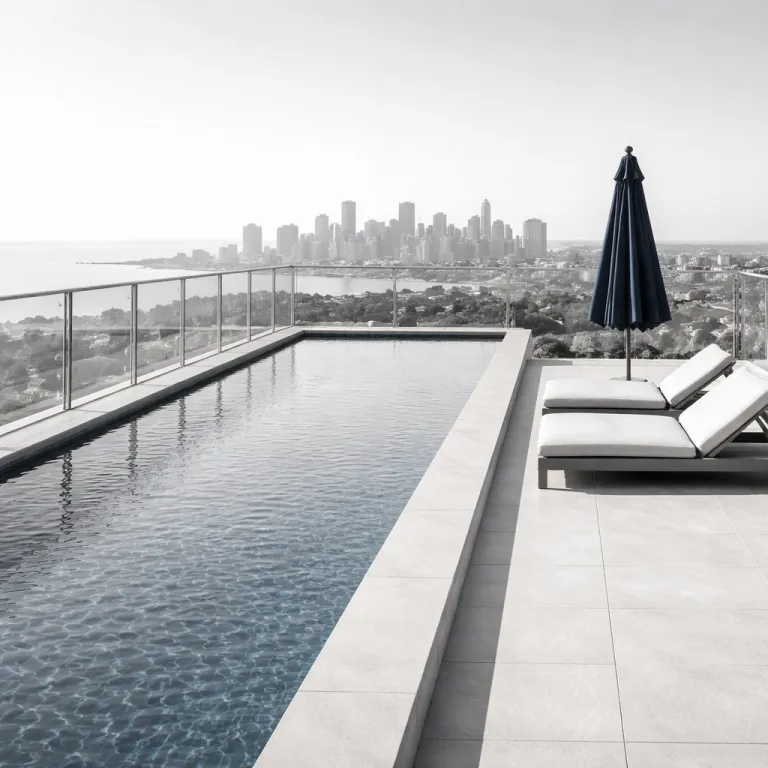
How to judge whether a rooftop pool hotel view is worth it
A rooftop pool can turn a standard hotel stay into a memory. The real question for view-focused couples is whether the rooftop pool surcharge actually buys a different world or just a higher sun lounger. When you compare hotels, think less about the word rooftop and more about how the pool, the height and the framing of the city or coastline work together at the time you are most likely to swim.
Psychologists talk about the “psychology of elevation”; the same city street seen from a hotel rooftop feels calmer, safer and more cinematic because your brain reads distance as control and privacy. That is why a modest heated pool on a quiet pool deck can feel more luxurious than a larger hotel pool at ground level that stares straight into traffic, even when the official views are similar. When you ask whether paying extra for a rooftop pool view makes sense, picture the exact hour you will be there, the light on the water and whether the angle on the skyline is something you cannot replicate from a patio, a lounge or a bar at street level.
Industry reports and booking platform data suggest that only a minority of luxury hotels worldwide offer rooftop pools, yet those that do often see noticeable booking increases once strong images circulate on social media. That scarcity is why many hotels feel justified in charging 20 to 80 percent more for rooms that include guaranteed access to a rooftop pool or a specific pool-view category. Before paying that, study every photo, look for obstructions, and read how guests describe the bar, the restaurant and the overall rooftop atmosphere rather than just the marketing adjectives.
When the rooftop pool view transforms the stay
Some properties prove beyond doubt that a rooftop pool premium can be money well spent. At Virgin Hotel New Orleans, the elevated pool scene combines a compact pool deck, a lively bar and long views over downtown that feel far removed from the street-level humidity. The rooftop bar–restaurant mix here matters; couples can move from a late afternoon swim to cocktails and then to a casual dinner without ever losing sight of the city skyline.
In Barcelona, Hotel Jazz shows how a smaller city hotel can use a rooftop pool to frame rooftops and church spires in a way that feels intimate rather than showy. The pool itself is modest, but the surrounding patio and lounge seating turn it into an outdoor living room where the value question becomes less about size and more about mood. One recent guest review described it as “a calm bubble above the traffic, especially at sunset,” which captures how the elevation changes the relationship with the city, particularly at the blue hour when lights flicker on and the views soften.
Paris offers a different lesson in value, especially for couples obsessed with iconic silhouettes. Properties that angle their hotel rooftop or terrace toward the Eiffel Tower often charge a steep premium, yet when the framing is right the skyline experience can feel almost private, even in a busy city. Internal booking data from several Paris hotels shows that tower-facing categories often sell out first, even when they are smaller than non-view rooms. Use that same analytical eye when you evaluate any rooftop pool, asking whether the view, the pool and the bar work together to create a sense of occasion that you could not buy with a simple city-facing room.
When the surcharge buys a pool, not a panorama
Not every rooftop pool promise survives contact with reality. Many hotels have built rooftop pools primarily as lifestyle amenities, then wrapped them in language about the best rooftop experience even when the views are partial, blocked or dominated by mechanical equipment. In these cases, the pool, the cocktails and the music may still be enjoyable, but you are paying for a scene rather than a transformative view.
Look closely at how enclosed some rooftop pools are, especially in dense downtown districts where safety walls, high glass panels or neighboring towers can cut the horizon into narrow slices. A rooftop pool that feels like a courtyard with a sliver of sky rarely justifies a major rate jump over a lower-floor hotel spa with a generous window and a calmer pool view. When you read reviews, pay attention to whether guests mention the bar, the lounge and the restaurant more than the views; that imbalance often signals that your money would be better spent on a standard room plus a visit to a separate sky bar instead.
Before booking, use a structured approach to any view promise, especially when a hotel rooftop is the main selling point. Compare marketing language with user-generated photo evidence and note how many images actually show the wider skyline. Apply the same discipline to rooftop pools by checking whether the hotel pool is open to non-guests, whether day passes crowd the pool deck at peak time and whether the bar–restaurant combination leaves enough quiet space for couples who care more about the horizon than the soundtrack.
The infinity pool question and the engineering of illusion
The most dramatic version of the rooftop pool debate usually involves an infinity pool. By design, an infinity pool uses a hidden overflow edge to create the illusion that water merges with the horizon, which can be breathtaking when the line of sight runs cleanly toward ocean, desert or city lights. When the engineering or the orientation is off, that same edge can become a visual barrier that chops the very view you paid to enjoy.
Architects and structural engineers now experiment with glass-bottom pools and cantilevered designs to push the drama further. The Joule Hotel in Dallas is a textbook example, with a cantilevered rooftop pool that projects over the street so swimmers feel suspended above downtown traffic while still protected by thick glass. In Los Angeles, Andaz West Hollywood uses its rooftop pool to open up long views of the Hollywood Hills and the wider city, proving that a well-placed hotel rooftop can make even a compact pool deck feel like a private observatory at the right time of day.
Infinity edges work best when the pool view aligns with a clean horizon and when the pool itself is not over-programmed with loud bar concepts or constant events. A quiet hotel spa with a smaller infinity pool can sometimes deliver a more powerful sense of escape than a larger, party-focused pool rooftop that faces another tower. When you weigh whether the extra charge makes sense, ask whether the infinity pool design enhances the views or whether it simply creates a photogenic foreground for social media while blocking the coastline, the Brooklyn Bridge–style landmark or the city skyline you actually came to see.
Five rooftop pool experiences where the view earns the premium
Some properties make the case for paying more feel almost conservative. At the Cape Town EDITION, the rooftop pool orients toward the Atlantic with Table Mountain and Lion’s Head in the same frame, so the infinity effect reads as a deliberate extension of the landscape rather than a gimmick. Here, paying more for a room that guarantees access to the hotel rooftop and its pool deck can be smarter than chasing a marginally larger suite without that view.
Virgin Hotel New Orleans delivers a different kind of value by pairing its rooftop pool with a relaxed bar and a flexible lounge layout that works for couples who want both quiet time and a little scene. Hotel Jazz in Barcelona shows how a mid-sized city hotel can use a heated pool on the roof to create a calm refuge above the streets, especially outside peak summer when the rooftop areas are less crowded. In Los Angeles, Andaz West Hollywood proves that a well-managed hotel pool with clear sightlines over the city can feel more exclusive than some larger hotels that market themselves as the best rooftop destination but offer only partial views.
Urban view hunters should also look at properties near major landmarks, where a sky bar or a hotel terrace can frame icons like the Brooklyn Bridge or a historic cathedral without requiring a full spa-level investment. In these cases, the value calculation may favor a standard room plus targeted spending at the bar–restaurant, especially if the hotel offers courtesy late check-out or a complimentary welcome drink for guests who book directly via an email address on the official site. As one industry FAQ puts it succinctly, “Are rooftop pools safe? Yes, when built and maintained properly. Do all rooftop pools have age restrictions? Policies vary; check with the hotel. Can non-guests access hotel rooftop pools? Some hotels offer day passes; inquire directly.”
FAQ
How much extra should I expect to pay for a rooftop pool view room?
Across major cities, a rooftop pool premium typically ranges from about 20 to 80 percent above entry-level rooms, depending on destination, season and how rare comparable views are in nearby hotels. You are paying for guaranteed access to the pool deck at desirable times, plus the framing of the city or coastline from that elevation. Compare the price of a standard room plus paid access to the rooftop pool, if available, with the cost of a dedicated pool-view category before deciding.
What makes a rooftop pool view genuinely better than a high floor room?
A rooftop pool combines elevation with open air, which changes how you experience sound, light and distance compared with a sealed window in a high-floor room. When the design is thoughtful, the hotel rooftop removes visual clutter so the skyline, mountains or ocean feel closer and more immersive. If the same view is available from a lounge, a bar or a restaurant one or two floors below, the rooftop pool surcharge may not be justified.
How can I tell from photos whether a rooftop pool view is obstructed?
Look for repeated angles in marketing images; if every photo is shot from one corner, there may be obstructions elsewhere on the pool deck. User-generated images on review platforms often reveal whether glass barriers, neighboring towers or signage cut into the views. When in doubt, email the hotel directly, ask for an unedited pool-view photo and clarify whether any construction is planned during your stay.
Are rooftop pools suitable for couples seeking quiet time rather than a party scene?
Many rooftop pools double as social hubs with DJs, loud music and a strong cocktail focus, especially in downtown districts. Couples who value calm should look for language about spa access, relaxation zones or limited day passes, and should check whether the bar–restaurant closes early or runs late-night events. A smaller heated pool attached to a hotel spa can often provide a more peaceful experience than a larger, highly publicized venue.
Is an infinity pool always better than a regular rooftop pool?
An infinity pool is not automatically superior; it depends on how the edge aligns with the horizon and whether it enhances or blocks the scenery. When the line of water meets ocean, desert or a clean skyline, the effect can be extraordinary and justify a higher rate. If the infinity edge faces another building or a busy road, a simpler rooftop pool with wider sightlines may offer a better overall view for couples focused on scenery rather than spectacle.