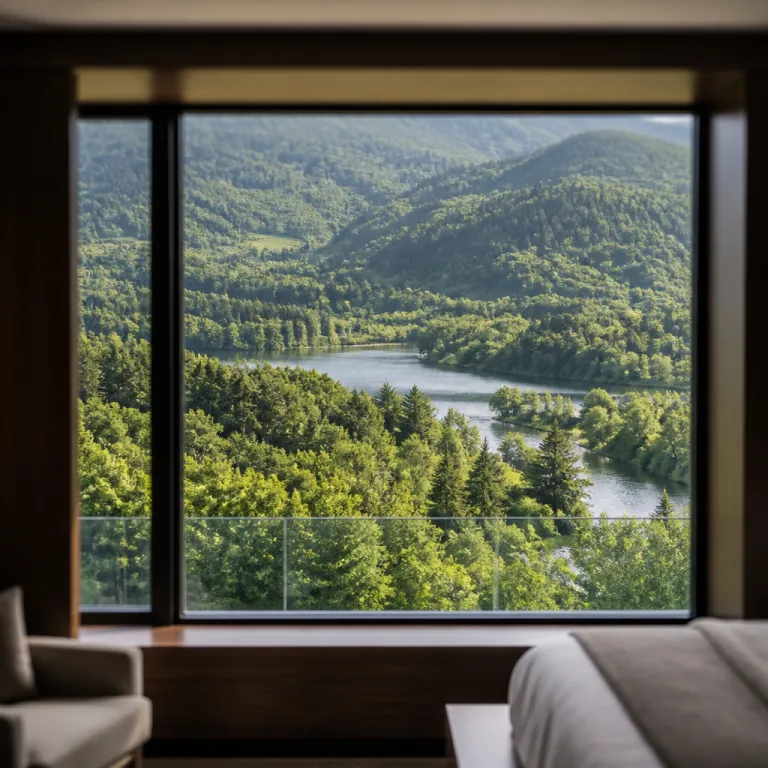
Why the frame matters more than the panorama
In a true view focused hotel, the most powerful design decision is often the window rather than the size of the suite. When architects treat hotel window design view architecture as the central project, the frame around the landscape becomes as considered as any artwork in the interior. A well judged window can bring guests closer to the city or to the trees outside with more emotional impact than an oversized glass wall.
Floor to ceiling windows promise drama, yet they can flatten the view into a giant, slightly overwhelming photograph. By contrast, a carefully proportioned window with a defined sill and slender mullions edits the exterior into a cinematic slice, turning a busy city or quiet historic harbor into a composed scene. The best hotels and resorts understand that windows are not just transparent surfaces but architectural instruments that choreograph how guests experience light, distance and depth.
Look at a design forward hotel in a dense building cluster and you will often notice how the facade steps or folds to angle windows toward the most compelling view. This is hotel window design view architecture at work, where the exterior and interior design teams collaborate like a single studio to align hotel rooms, roof terraces and public spaces with specific sightlines. When you browse a luxury booking website, pay attention to how often the photography shows the frame of the window itself ; that is usually where the real design award level thinking lives.
Framed views versus glass walls
Many travelers assume that more glass automatically means a better view, yet the reality of hotel window design view architecture is subtler. A full height glass facade can be spectacular for events or sky bars, but in hotel rooms it sometimes leaves guests feeling exposed and oddly detached from the exterior. A smaller, deeper set window can create a sense of intimacy, allowing guests to sit, lean or even lie against the reveal while the city or landscape feels close enough to touch.
Architects talk about the reveal, sill and mullion because each element shapes how the eye reads the view. A low, wide sill invites you to perch with a drink, while a higher one turns the window into a standing viewpoint that frames the roof lines and distant hills. Thin mullions can almost disappear, but a bolder vertical can divide the composition like a painting, which is why some award winning hotel design projects use them deliberately rather than chasing pure transparency.
Heritage buildings with thick walls and smaller windows often win the emotional game, even against new glass towers that collect design awards. In a converted prison or palace, a deep stone reveal can make a sliver of harbor or a line of trees feel intensely focused, as if the exterior were curated just for that room. If you are drawn to adaptive reuse properties, look for places where the historic structure is treated as an asset rather than a constraint, a theme explored in depth in our feature on buildings whose past lives become a hotel’s strongest amenity.
Light, orientation and the daily performance of the view
What you actually see from a hotel window changes hour by hour, which is why orientation is the quiet hero of hotel window design view architecture. East facing windows catch the first light, turning even a modest city street into a luminous corridor, while west facing rooms trade sunrise for long, theatrical sunsets over rooftops or water. South facing facades can flood hotel rooms with light all day, yet without careful interior design they risk glare and heat that make guests pull the curtains just when the view should be working hardest.
Thoughtful hotels and resorts now brief their design studio teams to map the sun path before drawing a single window. They decide which rooms should hold the best morning light for couples who wake early, and which suites should frame the blue hour when visitors and locals gather for drinks. Properties that take this seriously often perform well in design awards because judges can feel how the building, the windows and the interior finishes work together to modulate light rather than simply resisting it.
Material choices inside the room also influence how the view reads throughout the day, especially as limestone, warm toned wood and clay finishes become more common. Soft, matte surfaces near the window reduce reflections, so the exterior scene remains legible even when the sun is low. Hotels that lean into biophilic thinking, letting trees, gardens and water features interact with the facade, often create a layered experience where the window becomes a threshold between interior calm and living landscape, a theme we explore further in our guide to biophilic hotels that dissolve the boundary between room and nature.
Historic depth versus contemporary glass boxes
There is a persistent myth that only new glass buildings can deliver serious views, yet many of the most affecting hotel window design view architecture moments happen in historic conversions. Thick masonry walls, arched openings and irregular facades create windows that feel more like carved apertures than neutral panes, which can make a fragment of city or a glimpse of trees feel almost sacred. When a design studio respects this character, the result is a layered dialogue between past and present that elevates even compact hotel rooms.
Consider a restored townhouse hotel in a European city, where each window is slightly different because the original building settled over centuries. One room might frame a church roof and a sliver of river, while another captures only sky and chimneys, yet both can feel intensely personal. These are not generic skyline shots ; they are specific, unrepeatable compositions that often earn a design award precisely because they resist the homogeneity of many contemporary hotels and resorts.
By contrast, some new towers in districts like Brooklyn, New York or central London offer vast expanses of glass but little sense of place. The view is wide, yet the experience can feel like watching a city from an airport lounge, impressive but emotionally thin. When you compare options on a booking platform, look for photography that shows how the window sits within the wall, how the sill invites you to inhabit the space and how the interior design supports lingering rather than just looking.
How to read window design when you book
For couples planning a romantic stay, learning to read hotel window design view architecture from photos and floor plans is a quiet superpower. Start by checking whether the images show the frame, sill and a sense of depth, not just a cropped skyline ; this usually signals that the hotel design team cared about how guests would actually sit, dine or wake up in relation to the view. If every image is shot from the far corner of the room with curtains wide open, assume the experience may be more about scale than intimacy.
Next, pay attention to orientation and context, especially in dense city districts or along busy waterfronts. Ask the hotel directly which room categories face morning light, which look toward quieter courtyards with trees and which sit under active roof terraces that might host events. Properties that answer clearly tend to be the same ones that perform well in design awards, because they understand that transparency about the building and its surroundings builds trust with guests.
Finally, use tools like our golden hour test for hotel views to decide whether the premium for a view room is justified. A window that frames a specific tower, bridge or mountain at a particular hour often delivers more lasting memories than a generic panorama that looks similar all day. When you find a property where the architecture, the facade, the interior design and the surrounding landscape all align through the window, that is when the frame around the view quietly becomes the highlight of your stay.
FAQ
How can I tell from photos if a hotel window will offer an intimate view ?
Look for images that show the full window, including the sill and surrounding wall, rather than only the distant skyline. A deeper reveal, a built in bench or a chair pulled close to the glass usually indicates that the hotel design team intended the window to be used as a place to sit and linger. If every shot is wide and impersonal, the experience may feel more like a viewing platform than a private retreat.
Are floor to ceiling windows always worth paying extra for ?
Not necessarily, because more glass does not always mean a better experience. Floor to ceiling windows can be spectacular in corner suites or high floor bars, yet they sometimes create glare, heat and a sense of exposure in standard hotel rooms. A well proportioned, framed window with a comfortable sill can feel more romantic and livable, especially for couples who value intimacy over sheer scale.
Do historic buildings offer worse views than new glass towers ?
Historic buildings often provide fewer wide angle panoramas, but they can deliver more powerful, focused view moments. Thick walls and smaller openings create a sense of depth that turns even a partial city or garden view into a composed scene. Many award winning conversions use this character to their advantage, proving that emotional impact does not depend on the size of the window.
What should I ask a hotel before booking a view room ?
Ask which direction the room faces, what you will see at eye level from the bed or seating area and whether any nearby buildings or roof terraces might affect privacy. It is also useful to ask about morning versus evening light, especially if you care about sunrise coffee or sunset drinks by the window. Clear, specific answers usually signal that the property understands hotel window design view architecture and values guest experience over vague marketing language.
How does interior design influence the way I experience the view ?
Interior design determines how comfortably you can occupy the space near the window and how reflections or glare affect what you see. Matte finishes, warm toned materials and thoughtfully placed seating help the exterior scene remain legible and inviting throughout the day. When the interior supports lingering at the window, the view becomes part of daily rituals rather than a backdrop you only notice on arrival.